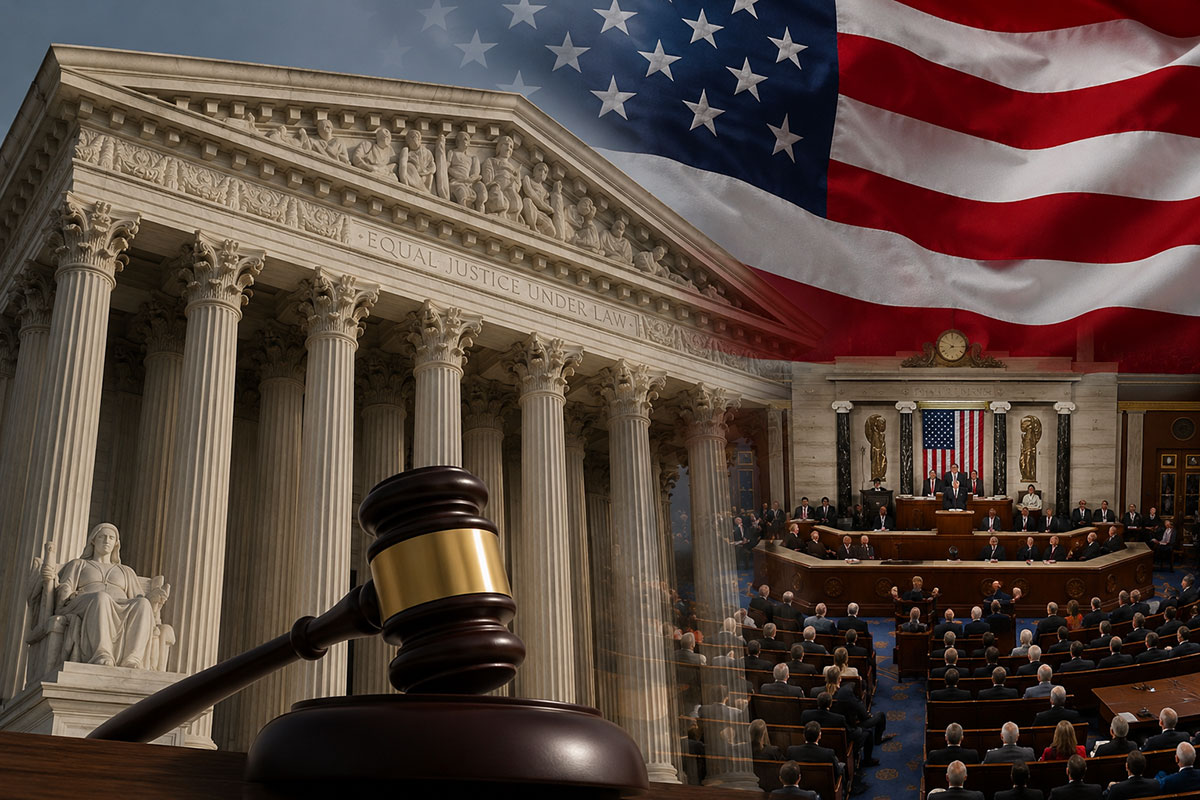
Voting Rights Act – The political situation in the United States is constantly evolving, as Supreme Court rulings can have long-term effects on political dynamics. Recently, a case attracting the attention of political analysts has been related to the possible annulment of a section of the Voting Rights Act. If this annulment is confirmed, Democrats may face serious losses in congressional elections, particularly in southern regions with minority majorities.
Historical Background of the Voting Rights Act
The Voting Rights Act was passed in 1965 with the purpose of eliminating discrimination against voters, especially in southern states where non-white citizens faced significant barriers to participating in elections. The legal protection provided by the Act has been credited with reshaping the geography of political representation, enabling many minorities to gain their political voice.
The Current Supreme Court Case and the Voting Rights Act
The case currently before the Supreme Court concerns specific provisions of the Voting Rights Act that protect minority-majority districts from being redrawn in ways that could weaken their influence. If the Court decides to invalidate these provisions, the Democrats will be at risk of losing a significant number of the seats they currently hold.
Consequences for Political Power and Voting Rights
The potential decision by the Supreme Court has caused considerable concern among Democrats and raised several questions about the future of their political power, particularly in the following areas:
Minority-majority districts: In many southern areas, Democrats rely heavily on minority voters to maintain their seats.
Redistricting: If minority protections are removed, redistricting could occur in ways that favor Republicans.
Political escalation: A ruling against the Voting Rights Act could send a message that minority protections are weaker, potentially discouraging voter participation.
Broader Political Implications of the Voting Rights Act
The potential loss of minority-majority districts could have serious consequences for the structure of Congress. Each seat lost would represent not only fewer votes but also reduced influence over policy-making. In today’s socio-political landscape, minority political representation is considered essential for the preservation of democracy.
Political Reactions and Party Strategies
Both Democrats and Republicans have already begun shaping their strategies in anticipation of this possible Supreme Court decision concerning the Voting Rights Act. Democrats have focused on energizing their base, urging large-scale voter turnout in upcoming elections.
The Democrats’ Strategy for Protecting Voting Rights
Voter mobilization: Campaigns have been organized to encourage minority participation in elections.
Voter education: Informational campaigns have been launched to increase awareness of voting rights and the value of each vote.
Alliances: Partnerships are being formed with organizations promoting democracy and minority civic engagement.
In contrast, Republicans view this situation as an opportunity to strengthen their position in predominantly white areas, interpreting the case as a means to consolidate their influence in Congress.
Concluding Thoughts on the Future of the Voting Rights Act
The Supreme Court’s decision is not merely a legal issue; it is critical for the future of political representation in the United States. If Democrats fail to adapt to a new reality, their electoral strategy may be disrupted with lasting consequences. Community organizations and political leaders are urged to recognize the importance of protecting and expanding voting rights to ensure strong minority participation in the democratic process.
This political dynamic is vital for American democracy, as it ensures the representation of all citizens and prevents the concentration of power in a few hands. The defense of the Voting Rights Act must remain a priority on the political agenda, regardless of judicial outcomes.